Gods & Symbols
Zeus and the Symbolism of Lightning
The thunderbolt identifies Zeus in texts and images—but an absent attribute can make an ancient figure difficult to name.
Part 1
Power made visible
Ancient Greek literature repeatedly associates Zeus with thunder and lightning. The thunderbolt becomes a compact sign of authority: it is sudden, elevated and beyond ordinary human control.
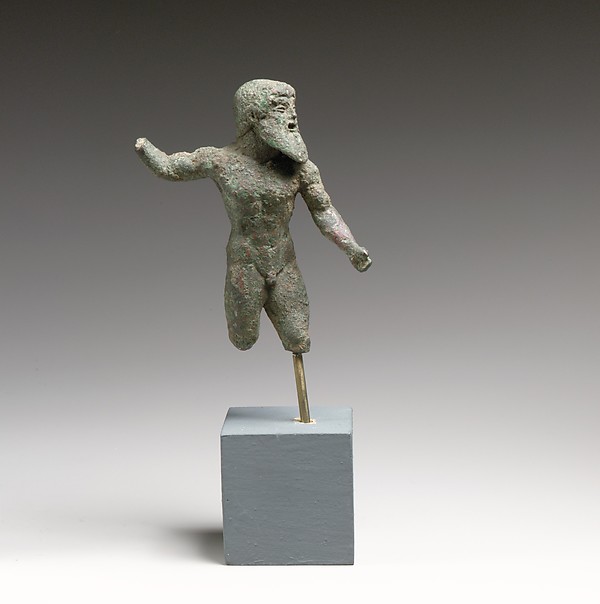
In visual culture, the attribute can help identify the god. A raised hand may once have held a thunderbolt for Zeus—or a trident for Poseidon. When the object is lost, responsible cataloguing preserves uncertainty.
Part 2
Symbols are evidence, not decoration
An eagle, oak or thunderbolt may support an identification of Zeus, but context matters. Findspot, date, pose, comparison and later restoration all affect what can responsibly be said.
This is why our captions follow museum records rather than upgrading a possibility into a certainty. The ambiguity is informative: it shows how much interpretation depends on objects that have not survived intact.
Part 3
Myth is not meteorology
The thunderbolt belongs to a mythic system of agency and divine power. A modern explanation of electrical discharge belongs to atmospheric science. Both can be studied on the same page, but they should never be presented as interchangeable accounts.
Open the record behind this article
Our summary does not replace the original catalogue, text or institutional guidance.
The Met collection record